Sound Instruction
  • Home
  • What's New
  • The Basics of Sound
    • The Nature of Sound
    • Acoustics
    • Microphones
    • Loudspeakers >
      • Loudspeakers - Continued
    • Amplification
    • Understanding Alternating Current
    • Circuit Values
    • Amplifier Arrangements
    • Transistors
    • Interstage Coupling
    • Noise
    • Distortion Effects
    • Using an Oscilloscope
    • Frequency Response
    • Power Amplification
    • Phase Splitting Circuits
    • Audio Transformers
    • Distortion
    • Shielding
    • Cabling
    • Electro-Acoustics
    • Audio & Hearing
  • Microphone Types
  • Mic Placement
  • Gain Structure
  • Demystifying The Mixing Console
  • Equalization
  • Compression
  • The Ins & outs
  • The Sub Bus
  • The Voicing Concept
  • Reverb
  • Good Habits
  • Psychoacoustics
  • Stage Isolation & Drum Booths
  • System Feedback
  • System Noise & Hum
  • Electronic Repair
  • Speakers
  • Tips & Tricks
  • Noise Gates
  • Mixing 101 & Beyond
  • DIY Projects
  • Digital Audio Basics
  • Stage Lighting
    • Lighting Basics
    • Brightness
    • Color
    • Controls
    • Smoke
  • Books
    • Yamaha Sound Reinforcement Handbook
    • Sound Recording & Production
    • The Art of Record Production
    • Recording & Production of Sound
    • BBC - Microphones
    • Microphones - 3rd Edition
    • How To Build A Small Studio
    • Acoustic Techniques for Home & Studio
  • The Blog
  • References Page

When To Use An Audio Gate

2/10/2016

1 Comment

 
Disclaimer:  This is all in good fun.  Don't take this stuff too seriously.

NEVER

That's right.  Never.  
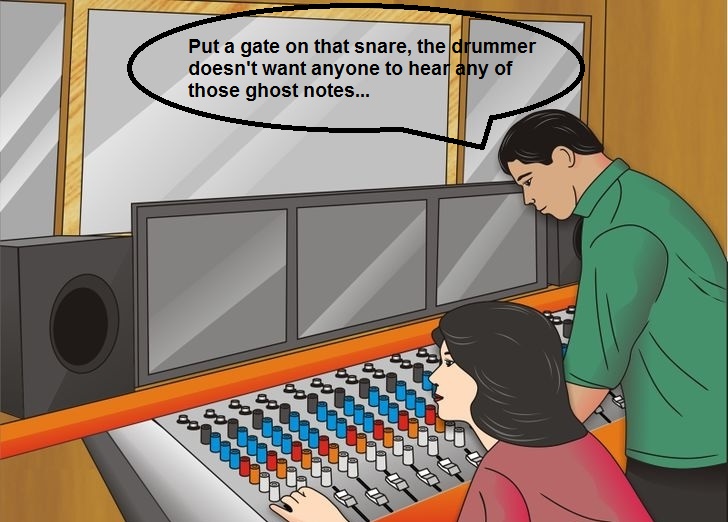
Picture


OH ALRIGHT....there are a few times that using a gate is okee dokee (in no particular order):

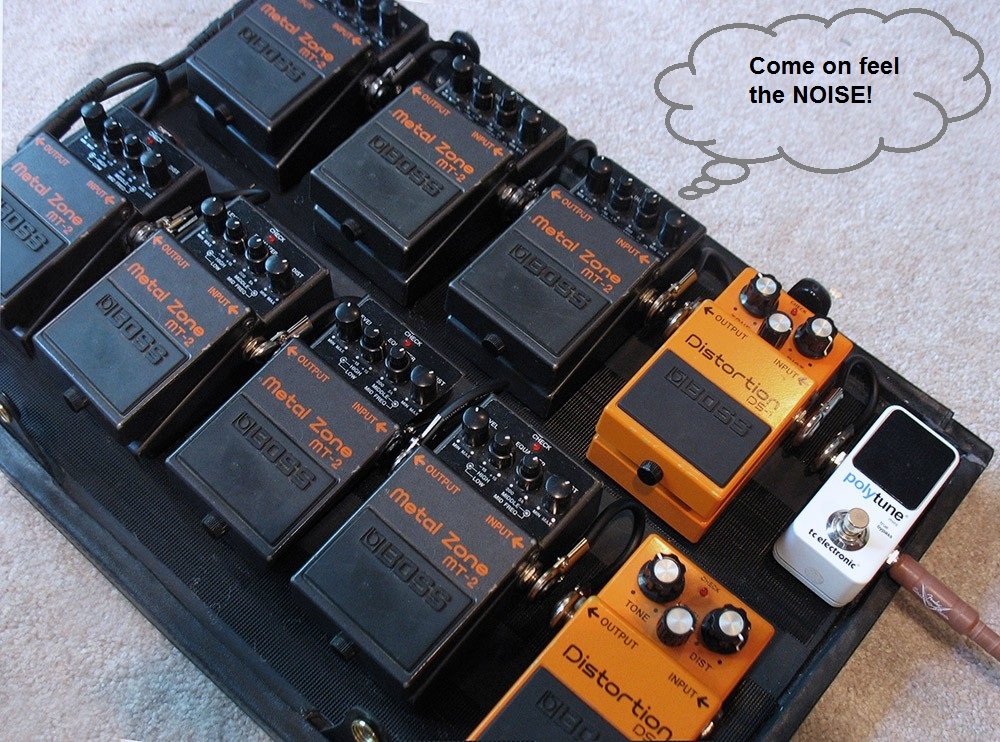
1. Heavy Metal Thunder Guitar Dudes -

Picture
You know, those dudes that say "Yeaaaaah" & "Rah" before every guitar solo?


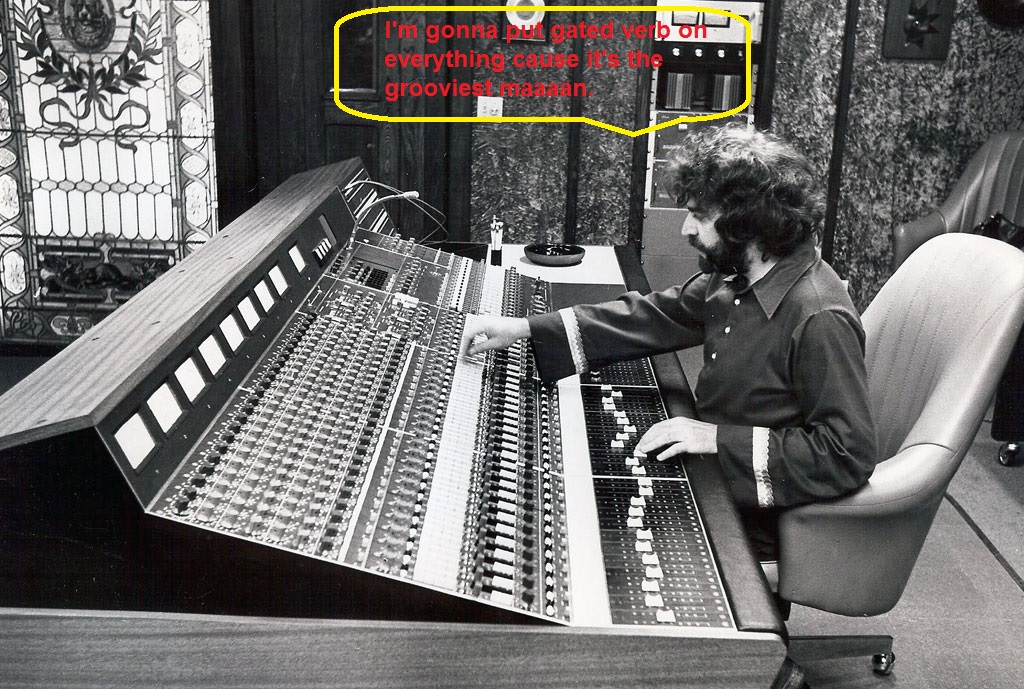
2. For That Never Before Used Effect of Gated Reverb:

Picture


​3. Broken Instruments (because you know, rather than actually fixing it, it's better to just cut it off at the end of every note).  
Picture
"OOOO, listen to all this hiss coming from that keyboard. Don't worry babe, i'll just put a gate on it.

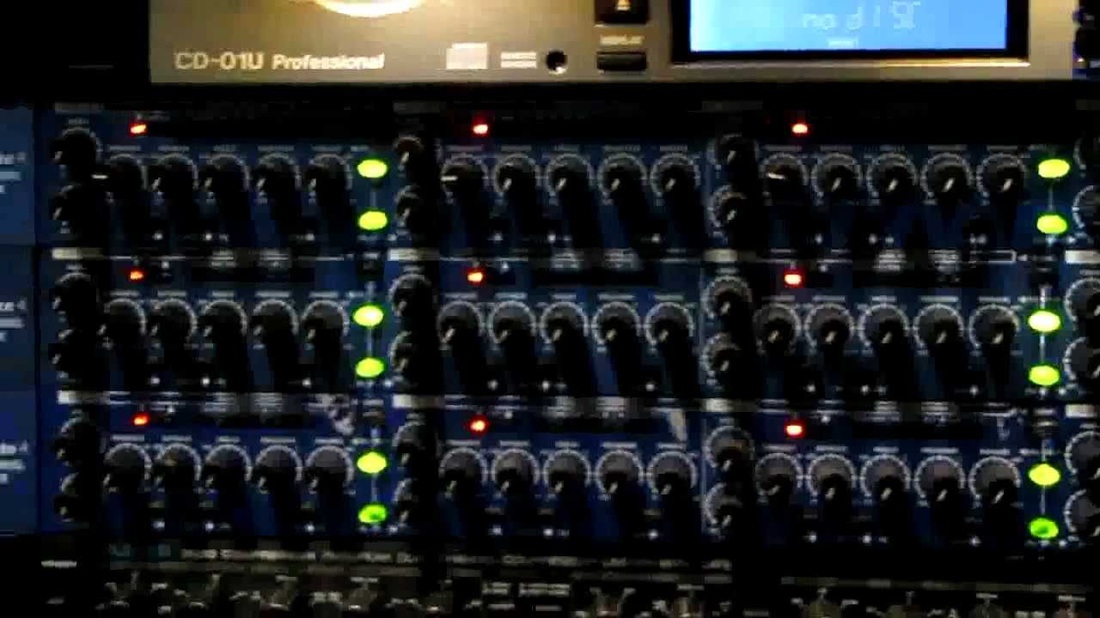
4. Cheap Rack Fillers to Make Your Client Think You Have A Ton of Gear:

Picture
" Lookie at all them there knobbies, that dude knows what he's doin ! "

The Only Good Use For A Gate:
Picture
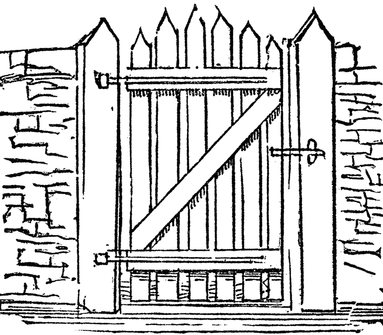
A gate is great for keeping critters out of yer yard.


Ooooh, Alright Alright - There's one cool thing you can do with an audio gate:

You can attach a frequency generator to it, and adjust the generator at around the 50-80hz region.  Then key the gate using the kick drum.  Run the output of the gate to the console, and there you have instant low end beef.  "Boooom."  Or, you can also use this technique with white noise and a snare.  Blend to taste.  Yes it works.

ORRRR - YOU CAN JUST USE A GOOD SOUNDING
​KICK OR SNARE, AND MIC IT CORRECTLY.

1 Comment
Rick Semerjian
2/10/2016 05:40:15 pm

I'll agree that gates get mis-used Especially by newbies who dont know how it set up the attack release hold, & especially the mount of reduction for the effect desired.
BTW adding noise to a snare gets almost the sam effect as a SHORT gated 'verb
And regards to "fixing" noise, I agree ALWAYS best to fix it at the source BUT sometimes thats the only option- noisy pedals , single coils, etc

Reply

Your comment will be posted after it is approved.


Leave a Reply.


    Do you like vintage recording gear and articles?  You should visit our sister site: The Vintage Audio Portal!


    **Advertise With Us! We have thousands of visitors a day. Contact us here to learn more.

    Archives

    August 2021
    December 2019
    August 2019
    December 2018
    November 2017
    August 2017
    July 2017
    June 2017
    May 2017
    March 2017
    February 2017
    December 2016
    November 2016
    September 2016
    August 2016
    July 2016
    June 2016
    May 2016
    March 2016
    February 2016
    January 2016
    December 2015
    November 2015
    October 2015
    September 2015
    August 2015
    July 2015
    June 2015
    May 2015
    April 2015
    March 2015
    February 2015
    January 2015
    December 2014
    November 2014


    Categories

    All


Powered by Create your own unique website with customizable templates.
  • Home
  • What's New
  • The Basics of Sound
    • The Nature of Sound
    • Acoustics
    • Microphones
    • Loudspeakers >
      • Loudspeakers - Continued
    • Amplification
    • Understanding Alternating Current
    • Circuit Values
    • Amplifier Arrangements
    • Transistors
    • Interstage Coupling
    • Noise
    • Distortion Effects
    • Using an Oscilloscope
    • Frequency Response
    • Power Amplification
    • Phase Splitting Circuits
    • Audio Transformers
    • Distortion
    • Shielding
    • Cabling
    • Electro-Acoustics
    • Audio & Hearing
  • Microphone Types
  • Mic Placement
  • Gain Structure
  • Demystifying The Mixing Console
  • Equalization
  • Compression
  • The Ins & outs
  • The Sub Bus
  • The Voicing Concept
  • Reverb
  • Good Habits
  • Psychoacoustics
  • Stage Isolation & Drum Booths
  • System Feedback
  • System Noise & Hum
  • Electronic Repair
  • Speakers
  • Tips & Tricks
  • Noise Gates
  • Mixing 101 & Beyond
  • DIY Projects
  • Digital Audio Basics
  • Stage Lighting
    • Lighting Basics
    • Brightness
    • Color
    • Controls
    • Smoke
  • Books
    • Yamaha Sound Reinforcement Handbook
    • Sound Recording & Production
    • The Art of Record Production
    • Recording & Production of Sound
    • BBC - Microphones
    • Microphones - 3rd Edition
    • How To Build A Small Studio
    • Acoustic Techniques for Home & Studio
  • The Blog
  • References Page