Sound Instruction
  • Home
  • What's New
  • The Basics of Sound
    • The Nature of Sound
    • Acoustics
    • Microphones
    • Loudspeakers >
      • Loudspeakers - Continued
    • Amplification
    • Understanding Alternating Current
    • Circuit Values
    • Amplifier Arrangements
    • Transistors
    • Interstage Coupling
    • Noise
    • Distortion Effects
    • Using an Oscilloscope
    • Frequency Response
    • Power Amplification
    • Phase Splitting Circuits
    • Audio Transformers
    • Distortion
    • Shielding
    • Cabling
    • Electro-Acoustics
    • Audio & Hearing
  • Microphone Types
  • Mic Placement
  • Gain Structure
  • Demystifying The Mixing Console
  • Equalization
  • Compression
  • The Ins & outs
  • The Sub Bus
  • The Voicing Concept
  • Reverb
  • Good Habits
  • Psychoacoustics
  • Stage Isolation & Drum Booths
  • System Feedback
  • System Noise & Hum
  • Electronic Repair
  • Speakers
  • Tips & Tricks
  • Noise Gates
  • Mixing 101 & Beyond
  • DIY Projects
  • Digital Audio Basics
  • Stage Lighting
    • Lighting Basics
    • Brightness
    • Color
    • Controls
    • Smoke
  • Books
    • Yamaha Sound Reinforcement Handbook
    • Sound Recording & Production
    • The Art of Record Production
    • Recording & Production of Sound
    • BBC - Microphones
    • Microphones - 3rd Edition
    • How To Build A Small Studio
    • Acoustic Techniques for Home & Studio
  • The Blog
  • References Page

CHURCH SECURITY: WHEN THE UNTHINKABLE HAPPENS

11/14/2015

0 Comments

 
Picture
There's so much violence and turmoil going on in the world today, the church can no longer turn a naive/blind eye to potential scenarios that could happen in their places of worship.  I don't believe that people should live in fear and paranoia, but at the same time, a reasonable and rational plan of action should be developed by the leadership team of each congregation.
​

THINGS TO CONSIDER

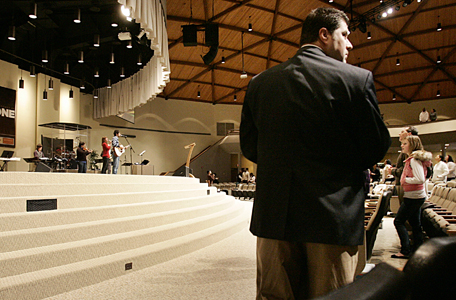
You have to be sober-minded about areas in which to spend money on.  Is it preferable to spend part of your budget on plastic trees and an outside water fountain, or perhaps measures and technology in insuring the security and safety of your church family?
​
Picture

​Security & Technology
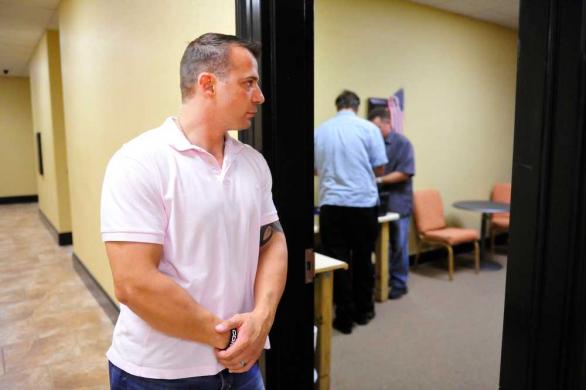
Security Cameras - Being able to see a threat before it happens, while it is happening, and/or having video of a suspect can aid in law enforcement doing what they need to do to bring a criminal to justice (like the Charleston S.C. tragedy).

Electronic Door Locks - The ability to lock down certain key areas in conjunction with security cameras is a super important tool in saving people's lives.  For example - in case of a violent scenario, the ability to see where the suspect is heading, and then locking the area before they can get there at a press of a button, is a very effective means in keeping people alive.  I have even heard of facilities using hallways as a sort of containment area to lock an assailant down in an area where they can't get out until the authorities arrive.

Panic Buttons - Having a panic button that will automatically dial law enforcement in every main part of your church building can be a very important tool in getting help right away.

2-Way Radios - In a crisis situation, the ability to communicate with other key members of your staff or team, can be the difference between life and death. Example: "Hey dude, I saw the gunman heading towards the fellowship hall! Lock it down!" 

​​Guns - I realize that not everyone will agree or feel comfortable with this section, but let's talk about it.  There are of course allot of things to think about in this regard:
  1. The Law: It is preferred that you follow your local state and municipal laws, but if a really bad scenario goes down, it would be very hard for any court to convict anyone regarding self-defense.  This is in no way legal advice, but just my opinion.  For instance, in Louisiana it is unlawful to carry a firearm into a church building, but I am very certain that on any given Sunday, most churches down here are "packed" houses if you know what I mean. 
  2. Training: Make sure whomever your church decides to carry, that they are of course thoroughly comfortable and trained in handling a firearm, and mentally stable to do so.  I know of some churches that have police officers that are actual church members, and who have volunteered as a security team during events.  This is called smart.  
  3. Concealment: So as to not freak out others, concealment is preferred, and so it is critical that each person carrying has their concealed carry permit.
  4. The Right Caliber & Round: Obviously you don't want a round that can pierce through an engine block.  That's called stupid.  You'll want something that spreads and stops.
Picture
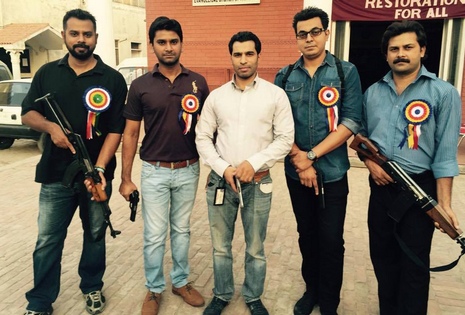
Some Pakistani brothers doing what they gotta do so that their church family can worship in peace.

​Tazers
 and The Like 
- If some dude comes in acting a fool, light'em up like a Christmas tree.

​Safe Rooms 
- You may have an unused room or large closet (preferably with walls of concrete cinder block or similar) that you can turn into a safe room. This is very preferable in areas where there are children during a service.  

Volunteer Training / Congregational Crisis Training - By simply saying something like: "If you hear any loud pops or bangs that sounds like a firecracker while you are teaching Sunday school, close your door, lock it, and call 911."   Taking a Sunday night to have law enforcement come and teach your congregation what to do in a crisis situation, should be a given for every congregation.

The Sound Booth - The sound booth is usually in a great position because you are in the very back of the sanctuary (usually).  Allot of times, your position may even be elevated.  This is an excellent place for a panic button, security personnel, etc.
​In closing, I pray that none of the above will ever have to be utilized, but if the unthinkable happens, I also pray that you will be prepared and protected.  Much Love Everyone!
0 Comments

COOL LIVE SOUND TRICKS - PART 3

11/8/2015

0 Comments


Piano Verb!  Weeee!

Picture
Oh Yes Indeedly!
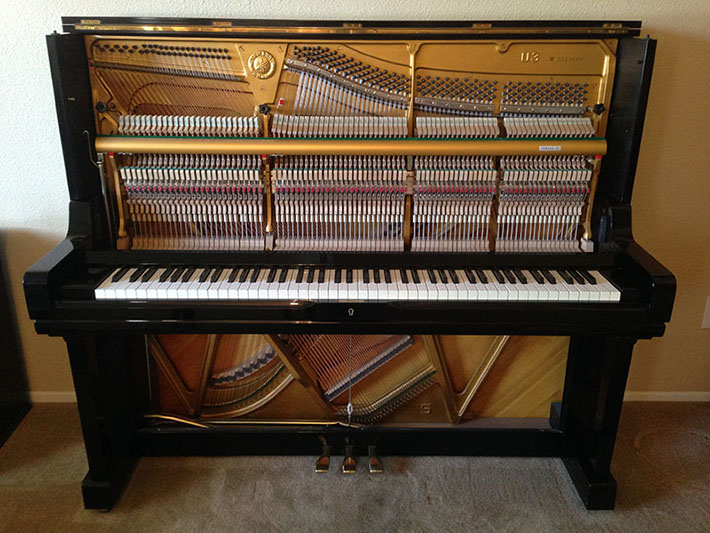
Hiding in most churches, is one of the coolest analog reverb processors you can find.  It's called a piano.  That's right.  With just a little bit of hardware, you can add a very unique sounding reverb to your arsenal of effects when mixing.  
How Does It Work?
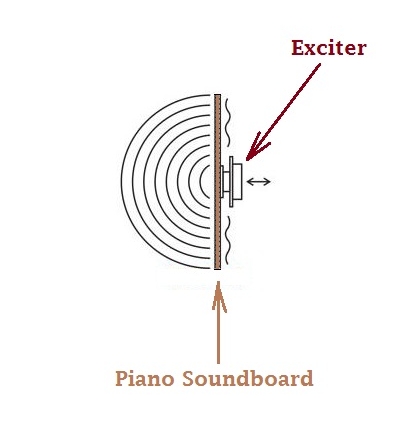
By sending audio to the piano with the sustain pedal pressed, the strings will sympathetically ring according to each note played via vibrational coupling from the track you send to it. This is accomplished by using a device called an exciter.  Say what?  
What Is An Exciter?
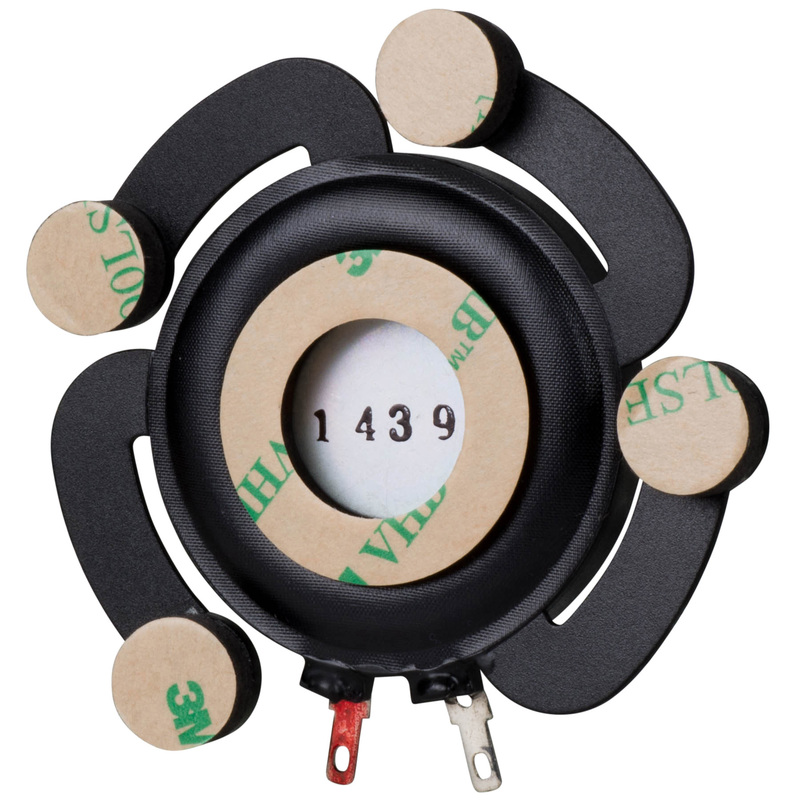
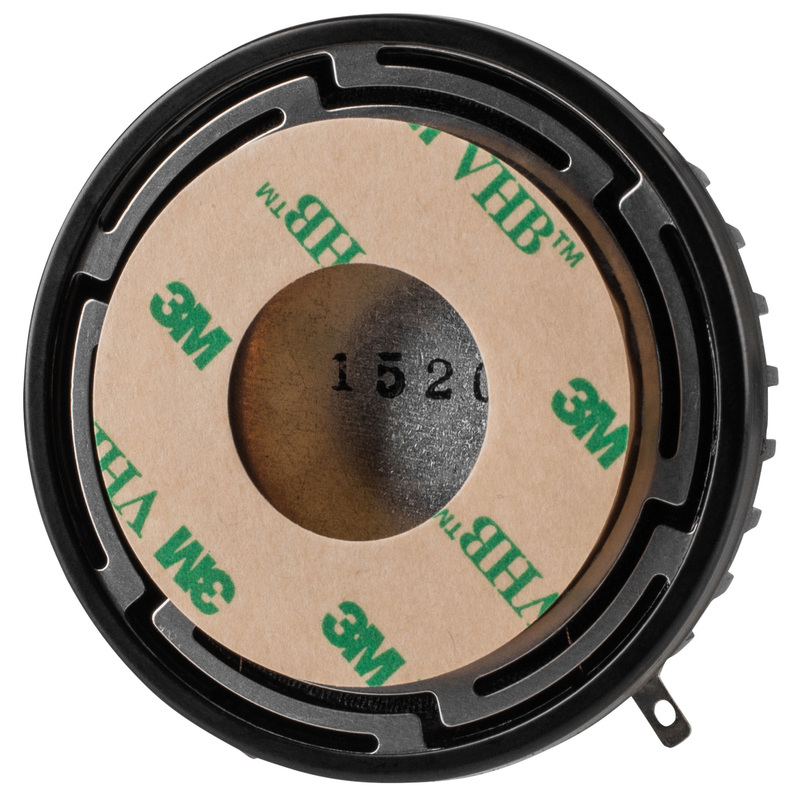
In layman's terms, an exciter is basically the motor of a speaker that is attachable to most surfaces.  When music is played through it, it turns that surface into a speaker.  It's hard to imagine that something like this could even work, but I assure you, they actually work really well!

Let's Get Started!
What You'll Need: 
  • Piano in an unused room
  • An exciter - 2 is ideal for better coverage (don't worry, they're usually cheap) but one will work ok if that's all you can afford.
  • A small amplifier - This can be anything 100 watts or lower - full range.
  • A condenser microphone(s)
  • Shielded signal cabling from your mixing console to the amp
  • Speaker cable from the amp to the exciter(s)
Picture
How it works in a nutshell


​How To Do It
  • Place the exciter(s) on the piano's soundboard or plate.
  • Place a brick, sand bag, or microphone base on the sustain pedal so that the strings are vibrating freely.
  • Run an open auxiliary out from your console to an amplifier that will power the exciters.
  • Place the microphone where it is mic'ing the piano where the reverb from the strings sounds the best.
  • Send the microphone cable(s) to an open channel (or channels panned if running stereo) on your mixing console & blend the resultant verb to taste.
Picture
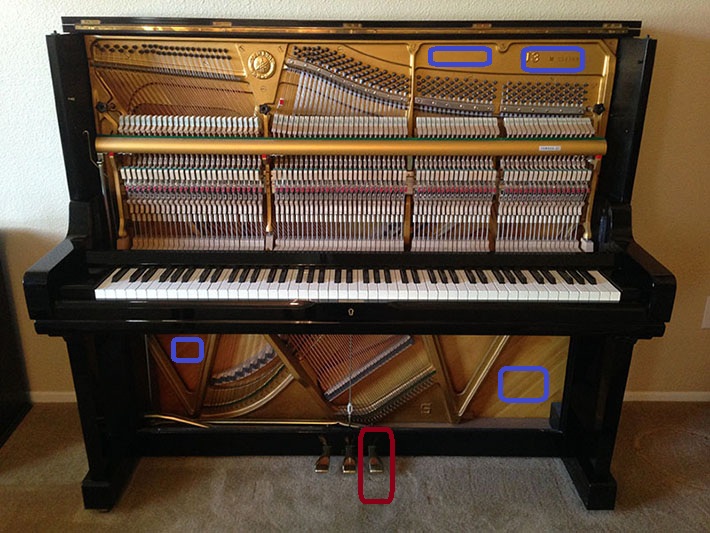
The rectangles in blue show you possible places where you can stick an exciter. You can also try placing the exciters on the back of an upright upright piano was well. Experimentation is the name of the game here. You'll want to place the exciters where the strings ring the most when music is played through them. Place a brick, or a heavy microphone base gently on the sustain pedal (marked in red) so that the strings will vibrate freely.


​Important Concepts 
  • Purchase higher wattage exciters (some come in very low wattage and typically won't work well for this purpose).  A 20 - 40 watt exciter usually will work well.  Dayton makes some pretty decent ones.
  • Use at least 2 exciters if you can - one on the bass side, and one on the treble side of the piano.
  • Run a microphone to where you are mic'ing the strings to catch the sympathetic ringing reverb they produce.  This type of reverb can actually be really pleasant sounding!
  • Using this type of reverb can bring a greater sense of realism to electronic piano sounds.
  • Avoid bass "shaker" type exciters.  They are not right for this application due to their limited frequency response.
  • If you don't want to use an exciter, an old method is to use a studio monitor, or something similar firing into the strings on the bottom of the piano sitting on the floor.  This is the old skool way, but exciters will work better, and will keep excess bleed from the microphone(s).  The exciter will physically vibrate the piano.
  • Please don't use a $100,000 Bosendorfer Grand Piano, or anything remotely similar unless you'd like to to be tortured with a cattle prod by the musical director.  The beauty is to find an old unused upright that is being neglected so that you can put it back to use!
  • A room that is not used during a set or service is most preferable so that there won't be any extraneous noises that makes their way into your new found verb. 

0 Comments


    Do you like vintage recording gear and articles?  You should visit our sister site: The Vintage Audio Portal!


    **Advertise With Us! We have thousands of visitors a day. Contact us here to learn more.

    Archives

    August 2021
    December 2019
    August 2019
    December 2018
    November 2017
    August 2017
    July 2017
    June 2017
    May 2017
    March 2017
    February 2017
    December 2016
    November 2016
    September 2016
    August 2016
    July 2016
    June 2016
    May 2016
    March 2016
    February 2016
    January 2016
    December 2015
    November 2015
    October 2015
    September 2015
    August 2015
    July 2015
    June 2015
    May 2015
    April 2015
    March 2015
    February 2015
    January 2015
    December 2014
    November 2014


    Categories

    All


Powered by Create your own unique website with customizable templates.
  • Home
  • What's New
  • The Basics of Sound
    • The Nature of Sound
    • Acoustics
    • Microphones
    • Loudspeakers >
      • Loudspeakers - Continued
    • Amplification
    • Understanding Alternating Current
    • Circuit Values
    • Amplifier Arrangements
    • Transistors
    • Interstage Coupling
    • Noise
    • Distortion Effects
    • Using an Oscilloscope
    • Frequency Response
    • Power Amplification
    • Phase Splitting Circuits
    • Audio Transformers
    • Distortion
    • Shielding
    • Cabling
    • Electro-Acoustics
    • Audio & Hearing
  • Microphone Types
  • Mic Placement
  • Gain Structure
  • Demystifying The Mixing Console
  • Equalization
  • Compression
  • The Ins & outs
  • The Sub Bus
  • The Voicing Concept
  • Reverb
  • Good Habits
  • Psychoacoustics
  • Stage Isolation & Drum Booths
  • System Feedback
  • System Noise & Hum
  • Electronic Repair
  • Speakers
  • Tips & Tricks
  • Noise Gates
  • Mixing 101 & Beyond
  • DIY Projects
  • Digital Audio Basics
  • Stage Lighting
    • Lighting Basics
    • Brightness
    • Color
    • Controls
    • Smoke
  • Books
    • Yamaha Sound Reinforcement Handbook
    • Sound Recording & Production
    • The Art of Record Production
    • Recording & Production of Sound
    • BBC - Microphones
    • Microphones - 3rd Edition
    • How To Build A Small Studio
    • Acoustic Techniques for Home & Studio
  • The Blog
  • References Page